Advergaming: everything you need to know
What Is Advergaming?
Advergaming is the word that indicates the combination of game and advertising. Specifically, advergames are brand-aligned games and/or videogames that convey a promotional message or simply the core elements of a brand’s identity.
Therefore, the advergame is the game that becomes a promotional tool, depending on the goal defined by the campaign: product placement, brand awareness, lead generation, event promotion, and much more.
Reducing the concept of advergame to merely a promotional vehicle is limiting.
We will explore this aspect in more depth shortly.
Although it is a trend that in recent years has orbited the digital marketing of more or less popular brands, the activity of advergaming was born many decades ago.
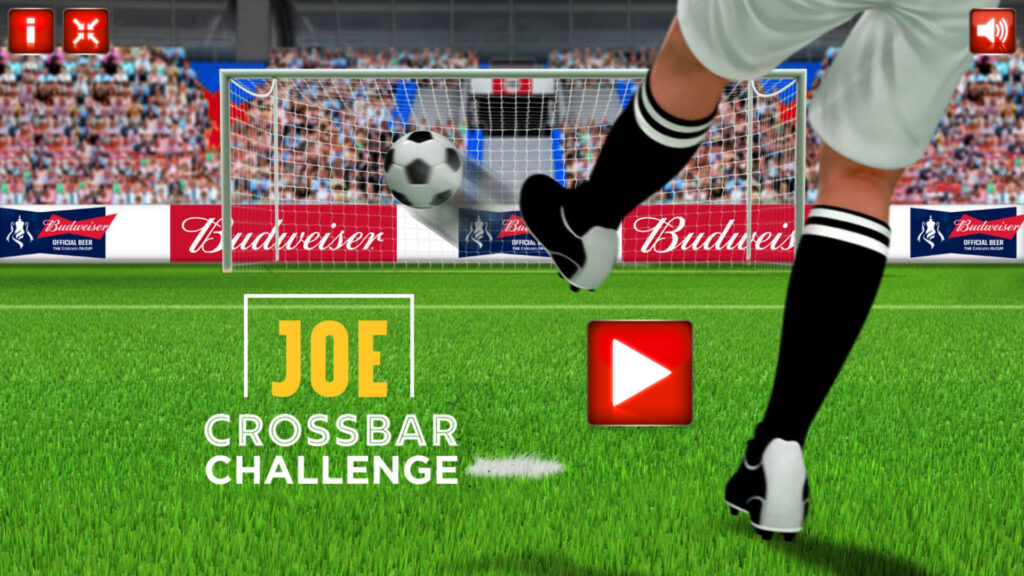
- It seems that the first advergame in history dates back to 1983, when Budweiser placed an arcade machine in pubs and restaurants where beer was served. In addition to the brand’s logo, the concept of the game was built entirely around the product. The game, in fact, consisted of successfully serving beer at the table.
- In Italy, however, Ferrero launched Cocco Game in 1999. Artematica developed the game for Ferrero as part of a marketing campaign that also included a Topolino comic in the same year.
From that year onward, Ferrero began advertising strategies focused on web games and digital solutions for children.
Before delving into the characteristics of advergames, we must make a clear distinction between two terms that are often confused: advergame and in-game advertising.
Advergaming vs. In-game Advertising
When you enter the world of digital marketing oriented toward gaming, you inevitably encounter many new terms that may sound similar but actually describe different activities.
As stated earlier, an advergame means using a videogame for promotional purposes.
The game can be customized at various levels according to the campaign’s requests and objectives.
A soft customization, for example, may involve the simple insertion of a logo within the game graphics.
A full customization, on the other hand, includes not only a complete graphic reskin, but also the construction of the game concept and narrative around the values and/or products of the brand.
In essence, game and brand merge into a single solution: the game experience becomes a brand experience

On the other hand, in-game advertising refers to the insertion of an advertising space within the game, such as a simple banner or moving graphic.
In this case, the game will not be built around the brand but will become a simple advertising channel.
Also, a single game can contain banners from multiple brands/companies that choose to advertise within it.
With advergames, we can achieve complete immersion in the brand, including the game concept, atmosphere, sounds, and gameplay.
On the other hand, in-game advertising limits the use to the graphic component of the inserted element, such as a banner, sign, or infographic.
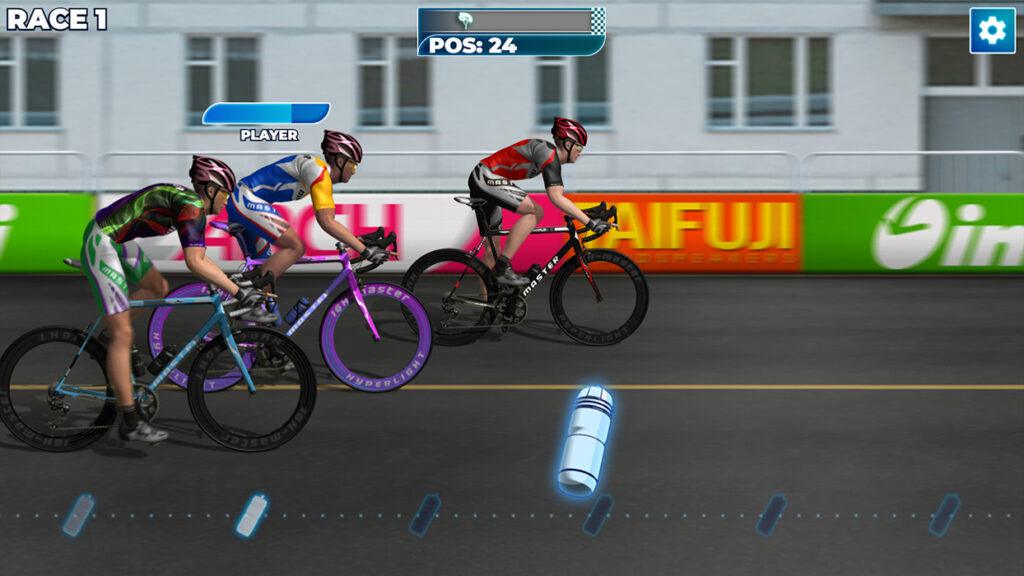
An example is the Cycle Sprint game, where advertising banners are placed on the race track.
Shortly, however, we will see a meeting point between advergame and in-game advertising, thanks to a particular type of advergame.
Advergaming: le principali tipologie
Depending on the level of customization, the brand’s presence in the game, and other aspects related to gameplay, we can identify three main categories of advergames:
- Associative
- Illustrative
- Demonstrative
Associative Advergames
In this case, there is an association with the brand through an element within the game that recalls its logo. Typically you will find a banner or advertising graphic.
Therefore, it is simple to deduce that the associative advergame corresponds to the concept of in-game advertising.
However, companies generally design and develop advergames for a single brand, which then commissions the project.
In contrast, the dynamic of in-game advertising has a broader scope. The producer or purchaser of a videogame can choose to sell individual advertising spaces within the game to different brands, creating a multi-brand channel.
This type of partnership allows companies to amortize costs, and they do not create a bespoke videogame, but simply purchase virtual advertising space.
An example of an associative advergame is Car Rush, in which the brand’s billboard appears during the car race.

Illustrative Advergames
Designers create the narrative concept, game objective, colors, and graphics according to the brand’s identity assets, promoting a complete brand experience for the user.
The illustrative advergame is, therefore, the type of game that molds itself most closely around the company.
It communicates to the target not only its identity but also the system of values the brand intends to convey.
An example of an illustrative advergame is Hoval. It's our platform game created ad hoc for a heating systems company aiming to acquire new customers in the hotel sector during trade fairs.
Protagonist of the game is Giggino the fixer, who moves in a space designed with the company’s furnishings and colors.
While jumping, Giggino must collect icons that symbolize the company’s peculiarities, completing the course in the shortest possible time.
Once finished, the user can “win” a free consultation for the installation of Hoval boilers.

Demonstrative Advergames
In this category are games that allow true simulation. You can play as your favourite athlete, wear the shoes you dream of, or use the new product launched on the market.
In essence, it’s immersion into a “dreamed” world through an avatar or the use of a specific object. In this way, the brand experience becomes more engaging and interactive.
Normally, this category includes games with more complex graphics, often in 3D, mainly playable on PC. An example is the Nike advergame “3D Vince Carter”.
Advergame: Beyond Advertising
Code This Lab has been developing videogames since 2009 and specialize in advergaming. Our clients operate in different geographic areas and various sectors.
We have heard many ideas and collaborated with numerous creative teams.
Videogames can be an excellent promotional tool thanks to their high level of engagement and ever-increasing accessibility.
The types of advergame are not always clearly defined, and the best solution is always a tailor-made one.
But the success of a game is not guaranteed.
Strategic choices must be made based on the campaign’s objective, target audience, and available budget.
- What is the purpose of the campaign?
- What are the campaign’s transmission channels?
- Who is my target?
- On which devices will it be played?
- Do I need user data? Which? And much more.
Without clear ideas and a specific action plan, any project becomes lengthy, expensive, and difficult to implement.
Advergame is a formula that works because, as we always say, Game conquers without invading.
As mentioned earlier, it is reductive to define the advergame as a simple advertising tool.
It goes beyond the usual advertising script and reaches a more sincere relational dimension between user and company.
In essence, the game is not an intrusive claim that enters your mail without permission; nor is it a banner that pops up in the middle of reading.
On the contrary, it is a choice.
People choose to play and interact with the content offered by the game, repeating the same choice multiple times.
The user-company relationship benefits from this measure, based on a sincere exchange, a “permissioned” one.
Unlike the advertising we are used to, from print to digital and telephone, the videogame does not invade the user’s space and does not arrive unless explicitly requested.
On the contrary, it is a tool that engages new people, stimulating the desire to play and compete.
Think, for example, of multiplayer games that run on smartphones, where you can challenge friends and relatives by inviting them to download the app.
Or, in a strictly advergame context; think of games inserted in food delivery apps (or other sectors) for the collection of points or precious coins. The user-company relationship becomes gamified, with consequent growth in interaction between customer and web application, and therefore in the purchase used to redeem the rewards, a complete loyalty system.