Recruiting and training with video games: examples and real-world cases

Training with video games is a new frontier for corporate growth.
Training and recruiting are two core activities in a company’s development and organization.
In recent years, the use of web games and video games within communication and human resources programs has been growing.
What does this mean in practice?
In a moment we’ll look at real examples of companies and brands that have adopted alternative approaches to recruiting and training with video games; but first, let’s see what’s happening in business contexts today.
When it comes to recruiting, the meeting point between professionals and companies, between supply and demand, typically happens through HR managers, or through channels connected to the company, such as temp agencies, cooperatives, and industry networking events.
However, it is increasingly difficult to identify the right talent aligned with a company’s business needs, because sometimes the company itself lacks the tools to properly assess the required skills.
For example: when hiring an IT manager or a role connected to the digital world, an internal professional with the right expertise is needed to run a technical interview.
But often, that person isn’t there
Why?
Because some roles, especially those tied to technological know-how, are only now entering corporate organizational charts, becoming necessary regardless of the company’s sector. These are new roles within the company system.
We are in the era of digital transition, where it’s not only processes that matter, but their digitization and the tools that support them.
Many new professional profiles are becoming part of business mechanisms, and they represent the new resources companies need.
That’s why recruiting has become increasingly crucial.
At the same time, companies are investing heavily in training internal teams.
Corporate learning mainly has two goals:
- Introducing new knowledge and strengthening employees’ skills, supporting company growth.
- Stimulating curiosity and reigniting employees’ interest by exploring new scenarios and topics.
In recent years, the human resources sector has found the right formats to make content and activities more dynamic.
Creative recruiting

In business contexts, innovative recruiting methods are truly many interesting and worth attention. Here are a few examples:
- Hackathons. Some companies organize hackathons, events where programmers and developers work together to solve complex problems. This helps companies identify strong technical talent while collaborating in a stimulating environment.
Facebook organizes hackathons worldwide to discover and recruit promising programming talent.
- Video CVs. Candidates create short videos to present their skills and personality in a more dynamic way than a traditional résumé. This gives companies a more complete view of the person.
Dropbox introduced the option for candidates to send a video CV to express motivation and talent.
- Social media recruiting. Companies use social platforms to search for, identify, and connect with suitable candidates, leveraging groups, pages, and networking tools to share job opportunities and attract talent.
General Electric used the #GEInstaWalk campaign on Instagram to offer an exclusive look at its facilities and attract tech- and innovation-oriented talent.
- Gamification. Companies introduce game dynamics to assess candidates’ skills and abilities, allowing them to identify the right people in a fun and engaging way.
PwC created an online game called Multipoly that simulates the life of a financial consultant, enabling candidates to experience the job and demonstrate their abilities.
- Referrals. Companies incentivize employees to recommend qualified candidates, leveraging personal networks to find the right talent and ensure cultural fit.
Airbnb has a referral program that rewards employees with a bonus if a recommended candidate is hired.
These are just a few examples of creative recruiting strategies companies are adopting today. The main goal is to attract the best talent by offering engaging experiences and showing an innovative approach to selection processes.
Recruiting with video games: McDonald’s, Banca Generali, Dublin Bus
Within this creative flow, gaming couldn’t be missing: in 2015 Banca Generali started introducing video games into recruiting activities; McDonald’s followed in 2019.
Banca Generali
We provided Banca Generali with three web games to include in the pre-selection phase, in collaboration with an external agency responsible for the company’s communication.
Minimal graphics and simple gameplay, yet able to profile candidates on certain personality traits.
- Grandi Numeri (Big Numbers)
A logic-numerical game inspired by the well-known 2048.
Gameplay relies on strategy, planning, and adapting to a constantly evolving grid. It can highlight aspects of the player’s profile because it requires logical thinking, patience, and intuition to reach the final goal.

- Genera parole
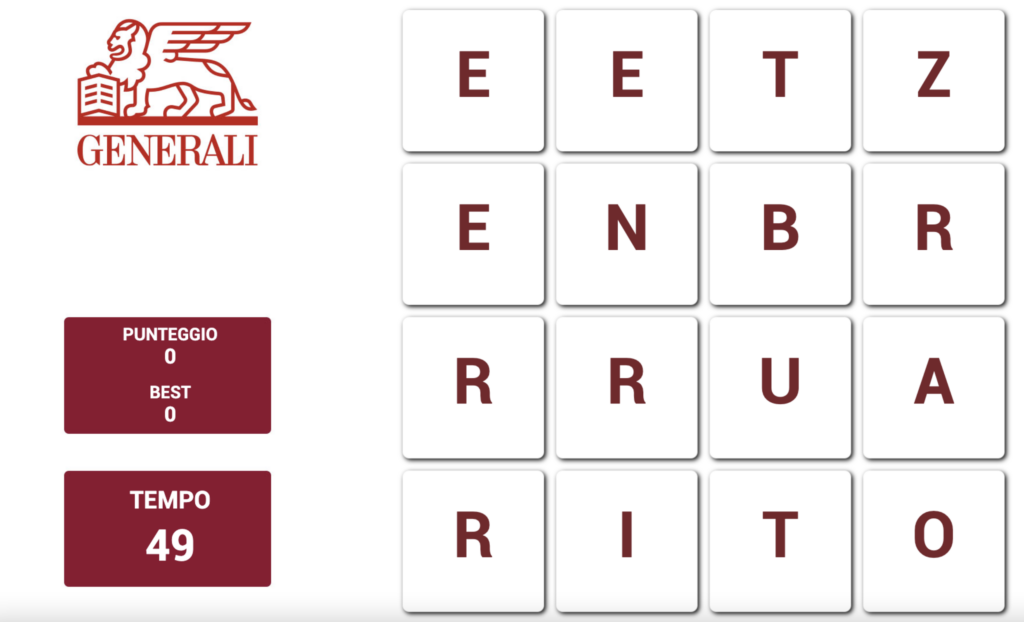
A game requiring speed, creativity, and strong vocabulary knowledge. Players form as many words as possible in a 4x4 letter grid within a time limit.
It tests language, cognitive skills, and quick thinking to maximize the score.
- Punta in alto
A block-building game where you “grow” a building upward by aligning blocks.
Useful for evaluation because it can highlight two different work attitudes:
-building as high as possible in the shortest time, without focusing on stability;
-aligning blocks perfectly, prioritizing solidity over height.
What kind of person are you? Do you want to reach the top, or do you prefer to do things properly?

McDonald's
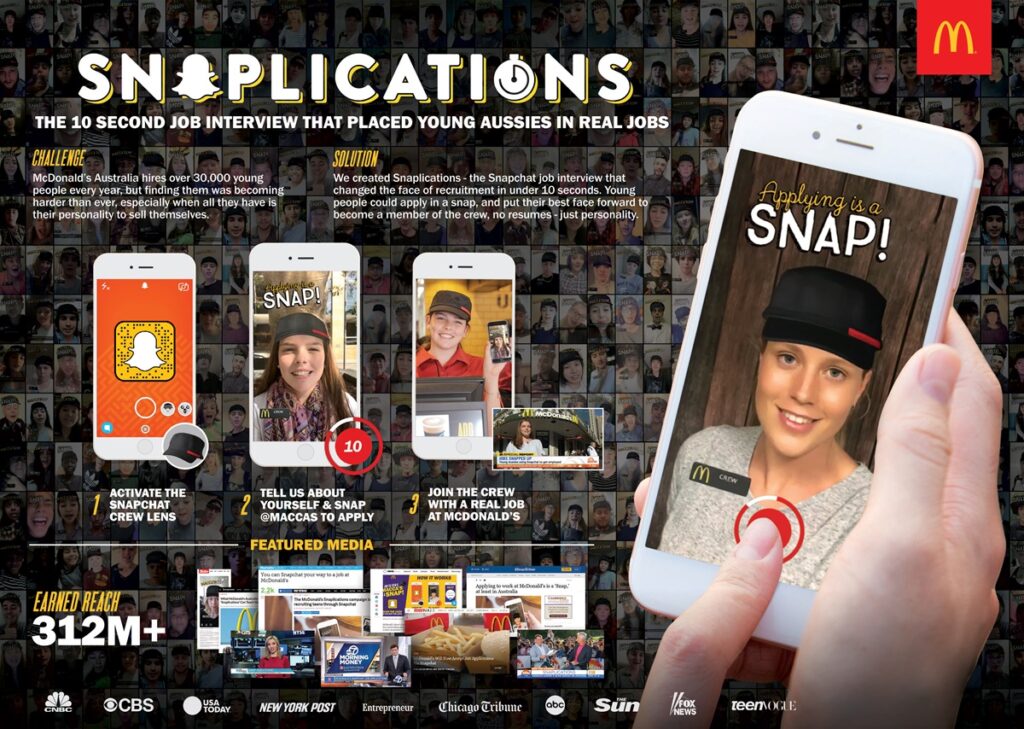
In 2019, the famous fast-food chain launched Snaplications, a mobile game that worked as a kind of recruitment filter.
Players had to take photos of their faces with different emotional expressions, which were then assessed by a facial recognition algorithm to determine suitability for working at McDonald’s. This innovative recruiting format allowed the company to reach a broad audience of potential candidates, especially younger people more likely to use mobile devices and engage with video games.
Dublin Bus
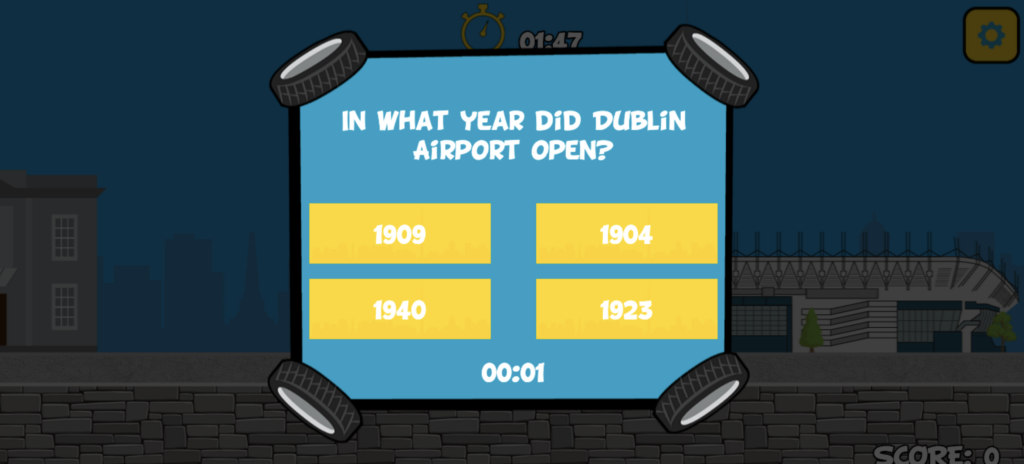
For the Irish public transport company, in 2023, in partnership with Maximum Media, we created Trivial Bus-route: a multiple-choice quiz game where users answer questions related to Dublin and the transport company.
Gameplay features a bus traveling through the city, presenting a question at each “stop.”
At the end of the game, a link leads to the application form for open roles. In this case, it’s not a game designed to assess candidates, but to recruit; its main objective was to attract attention and engage new applicants.
Alternative training
Corporate training has undergone an interesting shift in recent years, thanks to creative methods that make learning more engaging and effective. Here are some real examples of innovative training:
Ecco alcuni esempi reali di formazione innovativa.
- Microlearning. Companies use short, focused content—such as videos or interactive modules—to deliver specific, easy-to-digest information, helping employees learn quickly and concisely.
Google introduced Google Primer, a mobile app offering short lessons on marketing topics, delivering essential knowledge in small doses.
- Reality-based training. Companies use realistic scenarios to let employees experience complex work situations and build practical skills.
Zappos created Zappos Insiders, a training program that lets employees directly experience the customer journey through placements in different departments.
- Collaborative learning. Employees learn through collaboration and knowledge exchange with colleagues and mentors, supporting peer-to-peer learning and best-practice sharing.
IBM implemented IBM Knowledge Jam, an internal platform that connects employees to collaborate, solve problems, share experiences, and gain new skills.
- Learning management systems. Companies use digital platforms offering online courses, resources, and assessment tools for tailored training accessible anytime.
Microsoft created Microsoft Learn, an online platform with free courses to develop technical skills and certifications connected to Microsoft products and technologies.
These examples show how companies are experimenting with innovative approaches to make corporate learning more engaging, personalized, and aligned with employee needs, accelerating skill development and desired outcomes.
Training with video games: Walmart, Marriott International, IBM
Several well-known companies and brands have adopted video games or web games for corporate learning. Here are a few examples:
Walmart
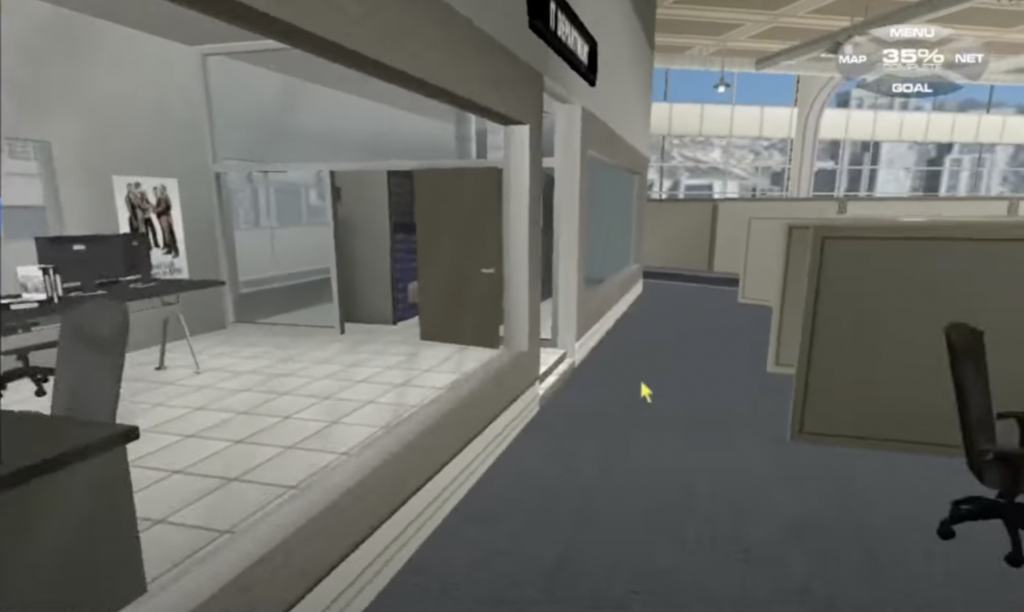
The retail giant, through Virtual Reality Marketing, proposed a game called Spark City to train employees on operations in a virtual Walmart store.
Employees could practice tasks such as organizing shelves and helping customers.

Marriott International
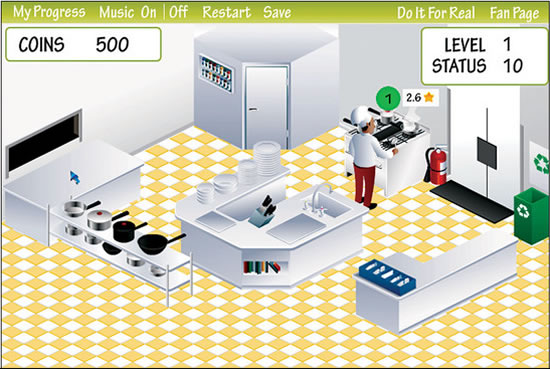
The hotel chain developed My Marriott Hotel to train staff in hotel operations. Participants managed a virtual hotel, making decisions related to marketing, resource management, and customer satisfaction.
IBM
IBM developed a game called Innov8 to train employees in business and resource management skills.
Innov8 is a virtual simulation that allows employees to create and manage a virtual company. Participants act as managers and must make strategic decisions to grow the business and face market challenges. Through the game, employees gain a practical understanding of business dynamics, resource management, decision-making, and corporate strategy.
These are just some examples of companies that have chosen training with video games and gaming-based recruiting—real cases that can inspire future projects.
We at Code This Lab have been developing gaming solutions since 2009, working on countless national and international brand and business projects.
Our catalogue includes over 300 games that can be customized end-to-end.
Games are an exceptionally powerful tool—not only for active, interactive communication, but also for engagement and for conveying values and knowledge.
Sources: Code This Lab, Virtual Reality Marketing, Wikipedia, IBM, My Marriott Hotel
Are you thinking about a gaming solution for your company or for a client?